
Graph building
Knowledge graph applications: how organizations use semantic AI to solve complex problems
Traditional vector-based RAG systems lose critical context when processing enterprise data. This guide explores how knowledge graph applications preserve semantic relationships to deliver deterministic, traceable AI across industries.
Introduction to knowledge graph applications
As organizations scale, the volume of unstructured data grows exponentially, creating a critical need for advanced knowledge graph applications. While many enterprises initially turn to generative AI, traditional vector-based RAG systems struggle with the complexity of enterprise knowledge, often losing critical context when processing documents and breaking nuanced information into isolated, meaningless chunks. This fragmentation inevitably leads to hallucinations and unreliable outputs during complex query operations.
We built Lettria to address the gap between AI promises and enterprise reality. Our GraphRAG approach preserves the semantic relationships within your data, maintaining structure rather than flattening it into mathematical abstractions. By mapping interconnected data points, these graph applications allow businesses to query complex networks of information with deterministic accuracy. In this guide, we will explore how semantic AI transforms raw content into structured knowledge, helping organizations solve complex problems and build transparent, verifiable AI systems.
Understanding knowledge graphs and semantic AI
What is a knowledge graph?
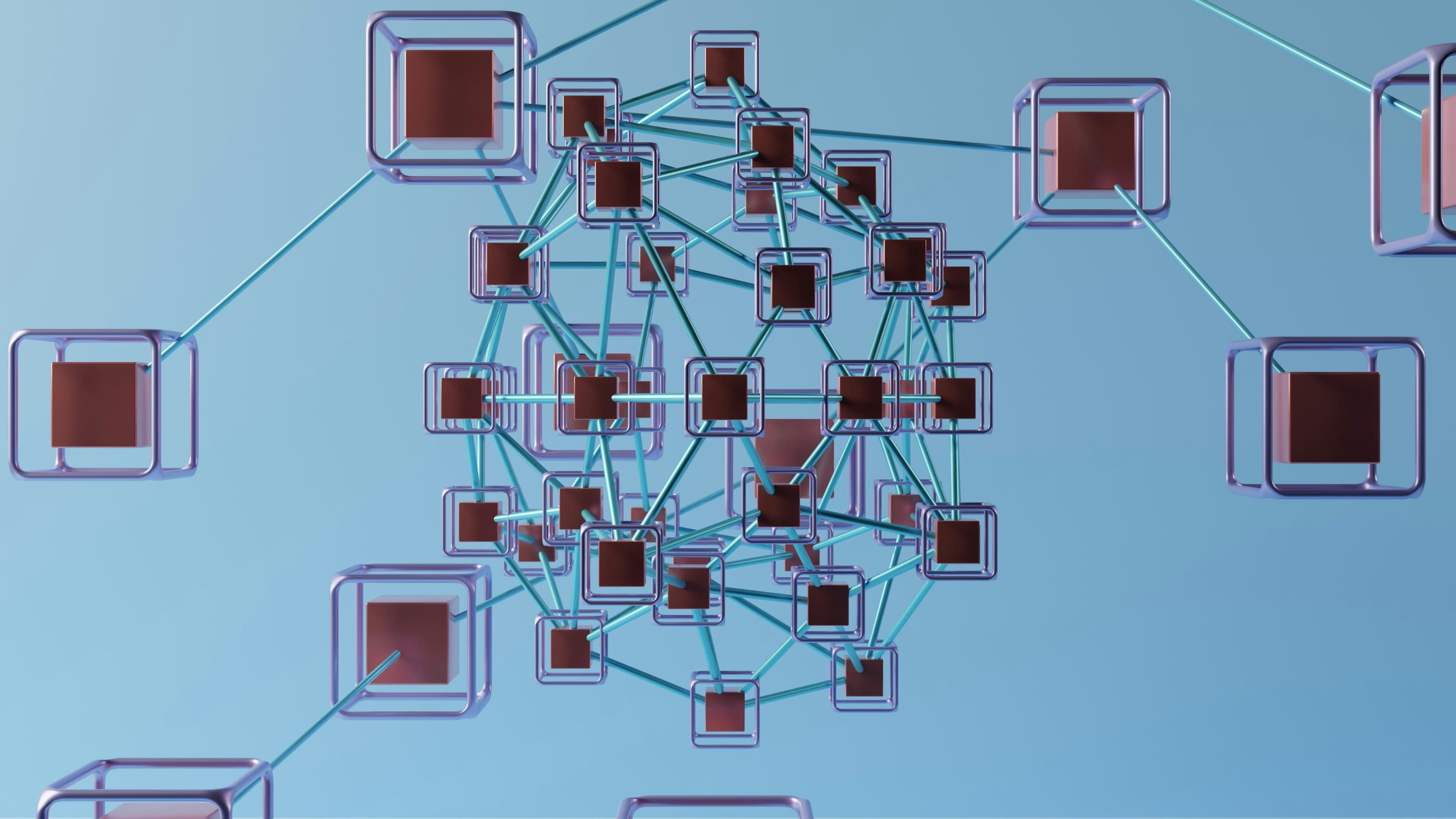
A knowledge graph is a structured semantic network that represents real-world entities, such as people, products, or organizations, and the precise relationships between them. Other AI solutions convert data into 0s and 1s, losing meaning in the process. Knowledge graphs work differently: while standard machine learning models flatten context into mathematical vectors, knowledge graphs preserve the exact topology of your information.
This interconnected data architecture allows systems to link disparate facts, reducing data silos that cost the average company up to 20% in operational efficiency. By maintaining this structural integrity, businesses can execute complex query operations that understand the actual meaning behind the data, not just statistical patterns.
The role of semantic AI in knowledge graph development
Semantic AI is the engine that builds and scales these networks. Manual relation extraction is too slow for modern enterprise needs, making advanced tooling essential.
Perseus is our text-to-graph AI system that converts unstructured documents into structured knowledge graphs with entities and relations automatically. By applying natural language processing and domain-specific rules, semantic AI identifies key components within text, whether it is news, tax documents, or law contracts, and maps them into a connected graph. This text-to-graph pipeline makes sure that the resulting models accurately reflect the specific vocabulary and operational reality of your industry.
Core applications of knowledge graphs
Enhancing search and information retrieval
Modern search engines must move beyond simple keyword matching to deliver results that actually answer the question. Our graph retrieval capabilities preserve data relationships and nuances during search operations, so context is never stripped away or lost.
When users query a database, the system traverses the network to find semantically related content, improving retrieval accuracy by up to 40%. The result? Professionals find exactly what they need, not just documents that contain matching words.
Powering intelligent recommendation systems
E-commerce and content platforms rely heavily on intelligent recommendations. By mapping customer behavior, product attributes, and purchase history into a unified graph, organizations can predict user preferences with high precision. These systems analyze multi-hop relationships to generate personalized suggestions, driving a 15-25% increase in cross-selling revenue compared to traditional collaborative filtering methods.
Facilitating advanced question answering
Enterprise question answering requires absolute factual accuracy, especially when handling sensitive business data. Integrating knowledge graphs with LLMs creates a robust framework for this exact purpose.
Our Intelligent RAG solutions deliver 30% more accurate results compared to traditional vector-based systems. The difference comes down to grounding: by anchoring AI responses in verified, structured data rather than probabilistic text generation, organizations can automate complex tasks and provide users with reliable, deterministic answers.
Real-world impact: knowledge graphs across industries
Healthcare and life sciences
In the medical field, precision and privacy are paramount. Knowledge graphs accelerate drug discovery by mapping complex interactions between genes, proteins, and clinical trials. Medical teams achieve 60% faster evidence-based research with full traceability, meaning every insight links directly back to peer-reviewed literature and verified clinical data.
Financial services and banking
The finance sector utilizes graph applications to monitor transactions and detect fraud. By visualizing the flow of capital between connected entities, financial institutions can identify anomalous patterns in real-time, reducing false positives in compliance checks by an average of 22% and securing financial networks against sophisticated threats.
E-commerce and retail
Retailers apply knowledge graphs to harmonize product catalogs and optimize supply chain operations. This semantic alignment powers hyper-personalized shopping experiences and improves inventory forecasting accuracy by up to 18%, putting the right products in front of the right customer at the right moment.
Intelligent agents and RAG systems
Autonomous virtual assistants require persistent memory to function effectively. Perseus powers graph-based AI agents through text-to-graph conversion and agent memory, allowing these systems to recall past interactions, understand context, and execute multi-step workflows reliably without losing the thread of the conversation.
Enterprise data integration and management
Breaking down departmental data silos is a primary challenge for large organizations. Our enterprise knowledge graph solutions excel at unifying complex organizational data with full traceability, creating a single, queryable source of truth that integrates with existing infrastructure.
Strategic advantages: how knowledge graphs solve complex problems
Unifying disparate data sources
Integrating fragmented databases is essential for analytics that actually reflect reality. Our ontology building capabilities create semantic knowledge models across diverse data sources, harmonizing structured tables and unstructured documents into a cohesive framework.
| Feature | Traditional Relational DB | Vector Database | Knowledge Graph |
|---|---|---|---|
| Data structure | Rigid tables and rows | Flat mathematical arrays | Interconnected nodes and edges |
| Context preservation | Low | Medium | High |
| Query complexity | Limited by strict joins | Similarity-based only | Multi-hop semantic traversal |
Enabling deeper insights and analytics
Black-box AI models introduce unacceptable risk to enterprise operations. You cannot audit what you cannot see. Our GraphRAG provides traceable AI outputs showing the exact graphs, nodes, and text snippets behind every answer. Alongside each response, you will see the reasoning path that led the machine to its final output. This transparency allows analysts to audit the process, verify compliance, and build trust in automated insights.
Driving automation and operational efficiency
Semantic automation drastically reduces manual data processing. By embedding business rules directly into the graph architecture, companies can automate complex workflows. The main operational benefits include:
- Cutting processing time by up to 35%
- Automating regulatory compliance checks
- Maintaining high accuracy across reporting tasks
Overcoming implementation challenges
Data quality and scalability considerations
Enterprise graph applications must process millions of entities without latency. The Perseus SDK addresses this through integration capabilities with leading graph databases like Neo4j and FalkorDB. This means high-performance querying, robust data quality, and scalable infrastructure that grows alongside your organizational data volumes.
Expertise and tooling requirements
Historically, building a knowledge graph required specialized ontology engineers and months of development. Today, modern platforms abstract this complexity. By providing intuitive APIs and automated machine learning pipelines, organizations can deploy semantic solutions in weeks rather than months, significantly reducing the barrier to entry and the need for dedicated in-house semantic experts.
Conclusion: the transformative power of knowledge graphs
The shift toward semantic architecture is redefining how organizations work with their data. Transparent, verifiable AI through GraphRAG transforms complex documents into actionable insights, and every answer traces back to its source. By adopting knowledge graph applications, companies move beyond probabilistic guessing to deterministic, structured reasoning.
We built Lettria because enterprise AI should deliver results you can trust and verify. That is the standard your business deserves.
Frequently asked questions
How do knowledge graphs differ from traditional databases?
Traditional relational databases store data in rigid tables that require computationally expensive joins for complex queries. In contrast, knowledge graphs store data natively as interconnected nodes and edges, prioritizing the relationships between data points for faster, more intuitive semantic querying.
Can knowledge graphs be integrated with existing enterprise systems?
Yes, modern knowledge graphs are designed for integration with your current infrastructure. They connect to existing SQL/NoSQL databases, CRM platforms, and document repositories via APIs, acting as an overarching semantic layer that unifies disparate data without requiring a complete infrastructure overhaul.
What are the key benefits of using knowledge graphs for businesses?
The primary benefits include eliminating organizational data silos, enabling 30% more accurate search results, and providing fully traceable AI outputs. They also allow businesses to uncover hidden insights through multi-hop relationship analysis that traditional analytics miss entirely.
Is a knowledge graph suitable for small and medium-sized enterprises?
Absolutely. Historically, these systems were reserved for large tech companies, but with the rise of automated text-to-graph tools and scalable cloud graph databases, SMEs can now deploy knowledge graphs cost-effectively to manage proprietary data and strengthen internal search capabilities.